Working with the Clay Field: Touch, Sensation and Healing
Introduction
Much of my work as a therapist has involved helping people find words for their experience. Increasingly, I am discovering how healing can also emerge through touch, sensation, movement, and the hands. Recently, through my experience of working with the Clay Field, this understanding has deepened.
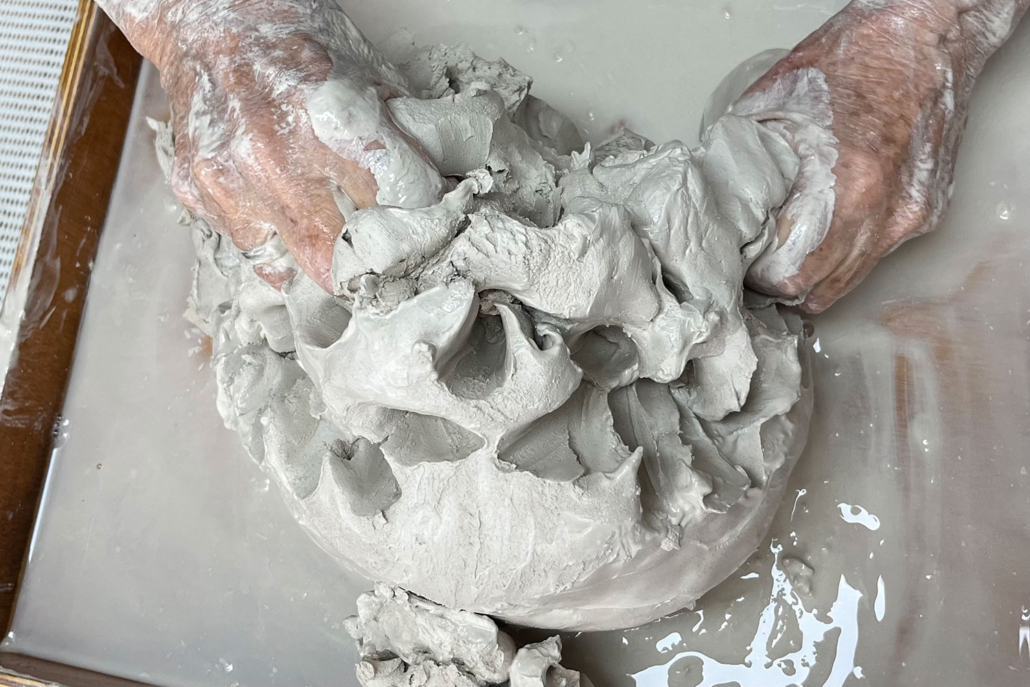
At the heart of the Clay Field approach is a simple yet profound invitation: let the hands guide the process. Rather than focusing on analysing the story or trying to understand experience cognitively, attention shifts into touch, sensation, movement, and the body’s own rhythms. Often the hands begin to express something before it can fully be understood in words.
Developed by Professor Heinz Deuser in Germany and further developed by Cornelia Elbrecht in Australia, the Clay Field uses clay, water, touch, and sensory awareness as a way of supporting emotional healing and reconnection. Working with the clay can help people move out of overthinking and into direct experience. As the hands begin to move and explore, something new can emerge, often bringing greater grounding, vitality, emotional connection, and embodied awareness.
This work has touched me personally as well as professionally. During an intensive training, I realised how overwhelming aspects of my own childhood had been. This was not an insight This was not something I thought my way into. It emerged through the experience of working with my hands in the Clay Field. I also became aware of something I had only partly understood before: how quickly I can dissociate due to fear of contact with myself. I could feel the small movement of pulling away, the numbing of sensation, the retreat from direct experience, and at the same time the possibility of staying present a little longer.
This has deepened my understanding of Gestalt therapy as a lived, bodily experience.
Gestalt therapy has always trusted organismic self-regulation, the idea that human beings naturally move toward balance, growth, and wholeness when supported by awareness and contact. Working with the Clay Field extends this trust into more sensory and pre-verbal dimensions of experience. It suggests that healing and reorganisation can occur not only through insight or storytelling, but also through touch, movement, rhythm, and sensory regulation.
This has shifted something important in me as a therapist. While Gestalt therapy deeply values awareness and contact, and at times leans towards intensifying experience in the hope that something unresolved may complete itself. Yet I can now see how, an emphasis on emotional activation and completion may risk overwhelming some nervous systems, particularly those shaped by early trauma or chronic anxiety.
The Clay Field offers another possibility
Rather than pushing for insight or emotional release, the work allows experience to unfold gradually and safely through the hands and body. In trauma therapy this is understood as titration, allowing small manageable amounts of experience to emerge slowly enough that the nervous system can stay regulated rather than becoming overwhelmed. Work at the Clay Field helps anchor experience in sensation and touch, creating a sense of safety and continuity while the organism reorganises itself at its own pace.
This approach aligns deeply with the Gestalt principles that have grounded my work as a therapist: phenomenology, contact, field theory, and paradoxical change.
Gestalt’s phenomenological stance asks: What is happening now, before explanation? The Clay Field is radically phenomenological. As the hands move in clay:
- sensation precedes language
- impulse precedes interpretation
- form emerges before narrative
There is no pressure to explain or interpret what is happening. The emphasis shifts from asking, “What does this mean?” to noticing, “What is happening in your hands right now?”
Working with clay also deepens my understanding of contact and the contact boundary. In Gestalt therapy, health is understood as the capacity for fluid contact with ourselves, others, and the environment. When people dissociate, contact collapses and sensation withdraws. The clay becomes a safe intermediary — an extension of the contact boundary itself. Through touch, pressure, movement, rhythm, and resistance, the nervous system slowly rebuilds its capacity for sensory engagement and embodied contact.
There is also something profoundly important in the literal presence of earth itself.
My own writing has increasingly explored the idea that the land shapes me and I shape the land. In working with the Clay Field, this becomes more than metaphor. The earth is physically present in the room. Hands meet clay. Body meets ground. Nervous system meets matter, gravity, texture, moisture, resistance, and movement.
The field becomes larger than the therapist and client alone. It includes:
- clay
- body
- sensory experience
- developmental memory
- ancestral and environmental ground
In this sense, the land is not symbolic. It is present as a regulating and relational force within the therapeutic process.
Haptic perception, knowing through touch and movement, lies at the centre of this work. The hands, especially the fingertips, are among the most sensitive parts of the body, richly connected to the nervous system and many areas of the brain. Working with touch, colour, movement, and sensation activates much more than the cognitive thinking mind. Emotional, sensory, visual, and implicit memory systems also become involved. The nervous system seems to recognise what is needed for grounding, regulation, healing, and continued human development before the conscious mind understands it.
Working with our hands can bring us back into contact with something deeply human in ourselves, a sense of feeling, vitality, connection, and aliveness that often lies beneath words.
What I find myself trusting more deeply now is the organism’s capacity to find its own way when given the right conditions. There is less striving to “fix” or “resolve,” and more respect for emergence, rhythm, sensory awareness, and embodied presence.
Again and again I am moved by the knowing of the hands and the profound simplicity of clay, water, touch, and movement. Through the Clay Field, my understanding of Gestalt therapy has not been replaced, but widened and deepened. It has become more sensory, more developmental, and more trusting of the slow unfolding of human healing.
References:
Cornelia Elbrecht, (2013). Trauma at the Clayfield: A sensorimotor Art Therapy Approach. Jessica Kingsley Publishers.